

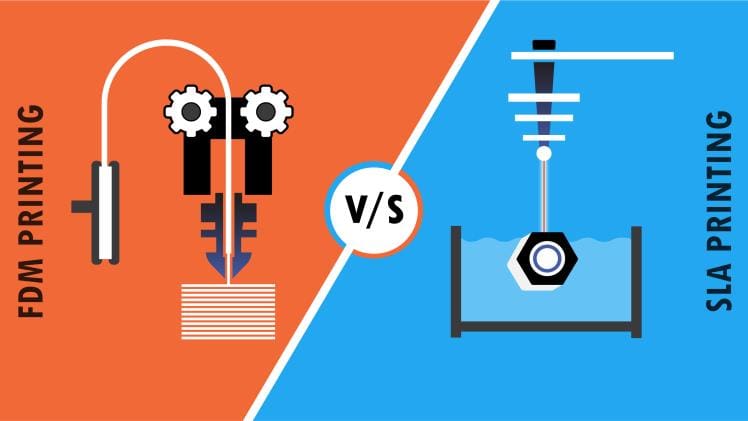
Fused Deposition Modeling (FDM) is a popular 3D printing technique used for printing parts and components with a wide range of materials. It is a relatively simple and cost-effective 3D printing process that produces parts with good surface finish and accuracy. However, it can be quite slow compared to other 3D printing technologies. In this article, we will discuss why FDM is so slow and what can be done to improve the speed.
Understanding FDM
FDM is a 3D printing process in which a filament is heated and extruded through a nozzle onto a build platform. The filament is melted and deposited layer-by-layer, building up the part. The key advantage of FDM is that it can be used to print with a wide range of materials, including ABS, PLA, nylon, and PEEK. It is also relatively easy to use and cost-effective compared to other 3D printing technologies.
Causes of FDM Slowness
There are several factors that can contribute to the slow speed of FDM.
- The first is the layer-by-layer nature of FDM. The speed of the printer is limited by the time it takes to print each layer, and the layer height of the part can have a significant impact on the speed. If the layer height is too small, it will take longer to print the part.
- The second factor is the speed of the extruder. The extruder needs to be able to move quickly enough to deposit the molten filament accurately. If the extruder is too slow, it will take longer to print the part.
- Another factor is the speed of the build platform. The platform needs to move quickly enough to keep up with the extruder. If the platform is too slow, it will take longer to print the part.
- Finally, the quality of the filament can also affect the speed of FDM. If the filament is of poor quality, it can cause the extruder to jam, resulting in a slower printing speed.
FDM is a popular 3D printing technology that is relatively simple and cost-effective. However, it can be quite slow compared to other 3D printing technologies. In this article, we discussed why FDM is so slow and what can be done to improve the speed. By understanding the causes of FDM slowness and taking steps to address them, it is possible to improve the speed of FDM 3D printing.