

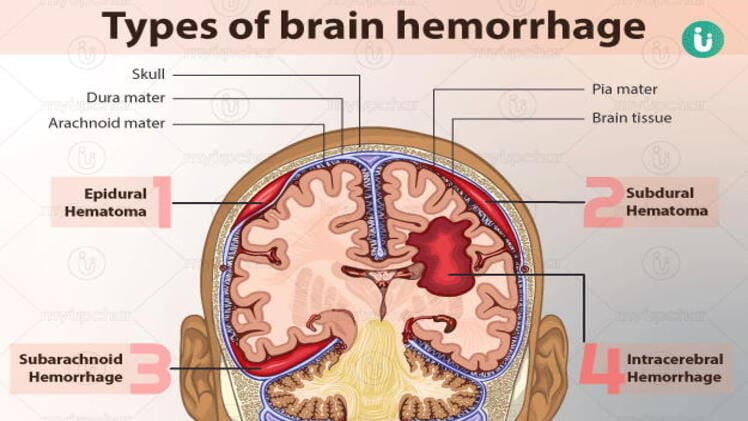
Brain hemorrhage, also known as intracerebral hemorrhage (ICH), is a type of stroke that occurs when a blood vessel in the brain ruptures and bleeds into the surrounding tissue. It is a serious medical condition that can cause death or permanent disability. The cause of brain hemorrhage can vary from person to person, but it is often associated with high blood pressure, aneurysms, and brain tumors. It is important to understand the causes of brain hemorrhage in order to identify the risk factors and prevent it from happening. But the question remains – is brain hemorrhage hereditary?
Causes of Brain Hemorrhage
Brain hemorrhage is most commonly caused by high blood pressure, aneurysms, and brain tumors. High blood pressure, or hypertension, is the most common cause of brain hemorrhage. Hypertension can cause the walls of the blood vessels in the brain to weaken and eventually rupture. Aneurysms, or bulging blood vessels, can also cause brain hemorrhage. An aneurysm can rupture and cause bleeding in the brain. Brain tumors, both benign and malignant, can also cause brain hemorrhage. These tumors can cause the blood vessels in the brain to rupture and bleed.
Is Brain Hemorrhage Hereditary?
The short answer is no – brain hemorrhage is not hereditary. While some conditions that can lead to brain hemorrhage, such as high blood pressure and aneurysms, can be hereditary, brain hemorrhage itself is not. However, it is important to note that certain genetic conditions can increase a person’s risk for brain hemorrhage. These include conditions such as arteriovenous malformations (AVMs), which are abnormal connections between the arteries and veins in the brain.
It is important to note that even if a person has a genetic condition that increases their risk for brain hemorrhage, they may still never experience one. It is also possible for someone to have a brain hemorrhage without having any known risk factors. In these cases, it is important to seek medical attention and treatment as soon as possible.
Brain hemorrhage is a serious medical condition that can cause death or permanent disability. While it is not hereditary, it is important to be aware of the risk factors in order to prevent it from happening. If you have a family history of high blood pressure, aneurysms, or brain tumors, it is important to talk to your doctor about ways to reduce your risk. If you experience any symptoms of brain hemorrhage