

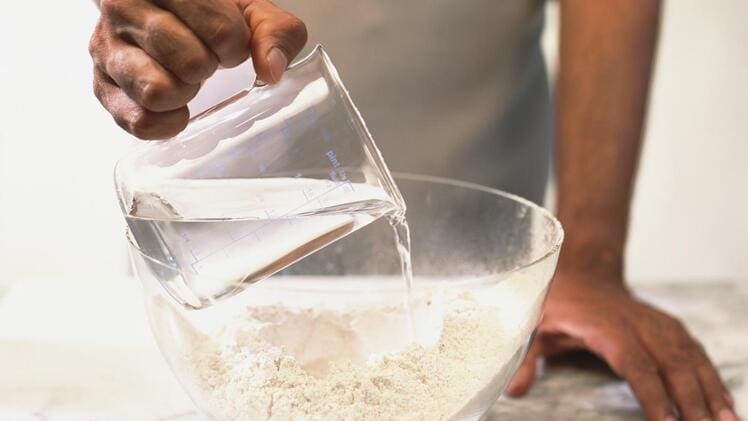
Flour is a common ingredient in many recipes, but understanding why it does not dissolve in water is essential for creating successful dishes. This article explains why flour does not dissolve in water and examines the physical properties that make it so.
Understanding Why Flour Does Not Dissolve
Flour is made up of starches, proteins, and other components that are not water-soluble. This means that when flour is added to water, the components of the flour will not break down and dissolve. Instead, the flour will form a paste-like mixture that will not separate from the water.
The starches in flour are long chains of sugars that are held together by strong bonds. These bonds are not easily broken by water, so the starches remain intact and the flour does not dissolve. Furthermore, the proteins in flour are also not water-soluble, so they too remain intact and the flour does not dissolve.
Examining Flour’s Physical Properties
Flour also has a unique physical property that makes it difficult to dissolve in water. Flour is hygroscopic, which means that it absorbs moisture from its environment. When flour is added to water, it absorbs the water and forms a paste-like mixture that cannot be separated from the water.
In addition, flour is also very fine and powdery. This makes it difficult for the particles of flour to separate from each other and dissolve in the water. Instead, the particles remain suspended in the water and form a paste-like mixture.
In conclusion, flour does not dissolve in water because it is made up of starches and proteins that are not water-soluble. Furthermore, flour also has a unique physical property that makes it difficult to dissolve in water. Understanding why flour does not dissolve in water is essential for creating successful dishes and baking recipes.