

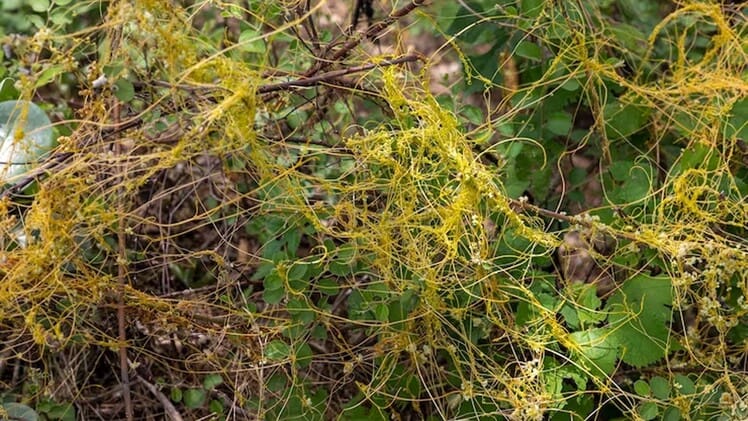
Cuscuta, also known as dodder, is a genus of parasitic plants that depend on other plants for their nutrition. This type of nutrition, known as parasitic nutrition, is a unique form of nutrition in which the parasite obtains its food from a host organism. In this article, we’ll explore why Cuscuta has adopted this parasitic mode of nutrition.
Parasitic Mode of Nutrition
Cuscuta is a genus of parasitic plants that depend on other plants for their nutrition. These plants have no roots, stems, or leaves and instead grow around their host plants, using them for nutrition. They are able to obtain the nutrients they need from the host plants by producing haustoria, which are specialized organs that penetrate the host plant’s vascular system. This allows them to absorb the nutrients they need directly from the host plant’s vascular system.
Advantages of Cuscuta’s Parasitism
Cuscuta’s parasitic mode of nutrition offers many advantages over other forms of nutrition. First, it allows them to obtain the nutrients they need without having to expend energy on photosynthesis. This is a major advantage as it allows the plants to conserve their energy for other activities. Additionally, parasitic nutrition allows them to obtain nutrients from a variety of plants, allowing them to be more resilient in a changing environment. Finally, it allows them to avoid competition with other plants for resources, as they are able to obtain all the nutrients they need from their host plant.
In conclusion, Cuscuta’s parasitic mode of nutrition offers many advantages over other forms of nutrition. It allows them to conserve energy and obtain nutrients from a variety of plants, while avoiding competition with other plants. This unique form of nutrition has allowed Cuscuta to thrive in a variety of environments.