

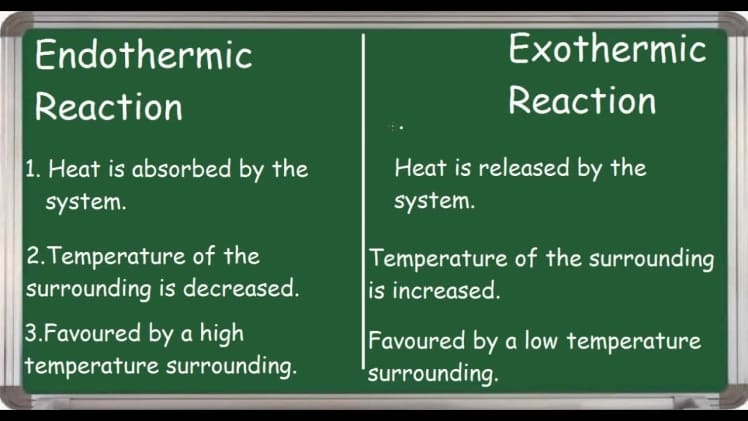
The terms exothermic and endothermic refer to the transfer of energy in a chemical reaction. Understanding the difference between these two types of reactions is essential for anyone studying chemistry. In this article, we will explore the definitions of exothermic and endothermic reactions, and the differences between the two.
Exothermic Reactions
Exothermic reactions are chemical reactions in which energy is released. This energy is in the form of heat, light, sound, or electricity. Examples of exothermic reactions include combustion, neutralization, oxidation, and the decomposition of a compound. In these reactions, the energy released is greater than the energy required to initiate the reaction. This means that the reaction is self-sustaining and can continue without any additional energy input.
Endothermic Reactions
In contrast, endothermic reactions require energy in order to proceed. This energy is typically in the form of heat, but can also be in the form of light or electricity. These reactions are the opposite of exothermic reactions, as the energy released is less than the energy required to initiate the reaction. Examples of endothermic reactions include condensation, synthesis, and the formation of a compound.
The difference between exothermic and endothermic reactions can be visualized using the following equation:
Exothermic reaction: Reactants → Products + Energy
Endothermic reaction: Reactants + Energy → Products
In exothermic reactions, the energy is released as a result of the reaction, while in endothermic reactions, the energy is required in order for the reaction to take place.
In summary, exothermic reactions are characterized by the release of energy, while endothermic reactions require energy in order to proceed. Understanding the differences between these two types of reactions is essential for anyone studying chemistry, as it allows for a better understanding of the chemical processes involved.