

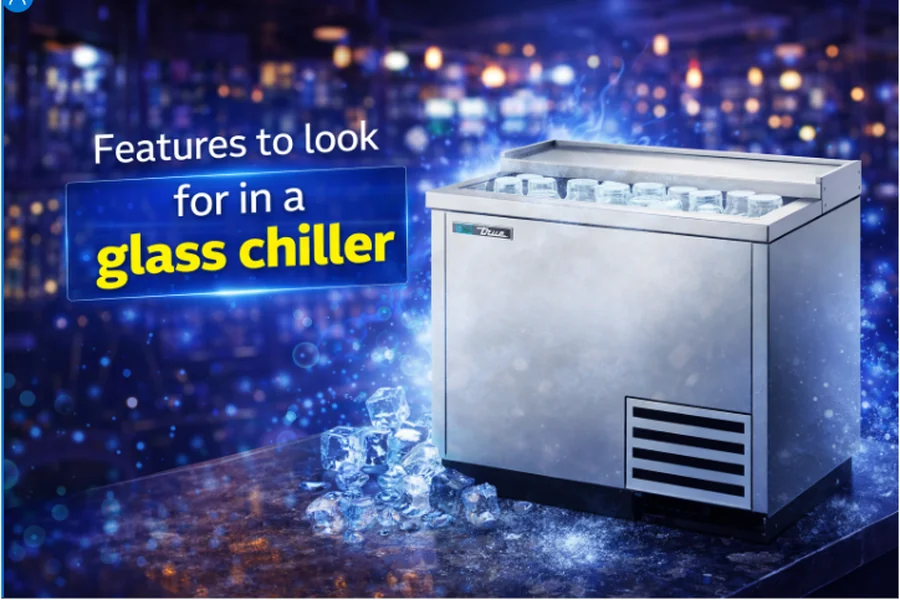
Glass chillers (also called glass frosters or mug chillers) are an essential piece of equipment for busy bars, brewpubs, restaurants, and beverage service counters. They keep glassware icy cold so beer and cocktails stay crisp longer, deliver a better customer experience, and speed service during busy shifts. But not all glass chillers are the same — choosing the right one will save money, avoid frustration, and ensure you get consistent results for years.
Below is a professional, practical guide that walks you through the features that matter, why they matter, how to prioritize them for your operation, and a short shopping checklist. Toward the end I’ll recommend a few specific models available from horecastore that are a good fit for typical bar and restaurant needs.
Quick overview — what a glass chiller does (and why it matters)
A glass chiller is a refrigerated cabinet designed specifically to cool glassware rapidly and keep it at near-freezing temperatures until the glass is needed. Cooler glass means slower warming of beer or cocktails, denser head retention, and a more refreshing experience for customers — small details that raise perceived quality and can increase repeat business.
For back-of-house staff, benefits include faster service (cold glass ready to go), less breakage (proper storage and stacking designs), and a cleaner, safer workflow when the unit fits the bar layout. Choosing the right model balances capacity, footprint, energy use, and durability.
How Many Glasses Do You Really Need? Decoding Chiller Capacity
When you start comparing sizes, it’s easy to get lost in abstract measurements like “cubic feet.” A far more useful number in any glass chiller buying guide is the actual glass capacity. Manufacturers often state how many standard pint glasses or martini glasses a unit can hold. Since a dozen bulky beer mugs take up much more room than a dozen delicate coupes, this real-world number gives you a much clearer picture of what will actually fit, helping you choose the best glass froster for your home bar.
So, how do you find your magic number? Think about your typical gathering. A good rule of thumb is to multiply your usual number of guests by the number of drink rounds you expect to serve. If you often host 10 people who will likely have two or three drinks each, you’ll want a unit that can comfortably hold 20-30 glasses. This simple calculation prevents a bottleneck and ensures you always have a perfectly frosted glass ready for the next pour.
Of course, a higher capacity often means a larger appliance, so you’ll need to balance your ideal number with the physical space you have. Whether you need a small countertop unit or something with the capacity of a commercial bar glass chiller, the goal is the same. But holding a lot of glasses is only useful if they get cold quickly and stay that way. That’s why the next crucial feature to consider is the chiller’s temperature range and chilling speed.
Automatic Defrost & Glass Doors: Are These Convenience Upgrades Worth It?
Beyond raw performance, how a glass chiller fits into your life depends on its convenience features. One of the biggest decisions you’ll make is between a manual or automatic defrost system. A manual defrost model works like an old chest freezer—you’ll need to unplug it and let the ice melt out a few times a year. While more affordable, it’s a chore. An automatic defrost unit, on the other hand, handles ice buildup on its own, offering a true set-it-and-forget-it experience that many find is worth the extra cost for their home bar.
Another key choice is the door. This decision is a classic trade-off between visibility and efficiency, and it’s a core part of any good glass chiller buying guide.
- Glass Door:
- Pros: You can see your inventory at a glance and show off your perfectly frosted glassware.
- Cons: Glass is a poorer insulator, leading to slightly higher energy use.
- Solid Door:
- Pros: Offers superior insulation, keeping the cold in and your electricity bill down. Many are finished in sleek stainless steel.
- Cons: You have to open the door to see what’s inside, releasing cold air.
What About Instant Frosters and Sanitizing Cycles?
While most chillers keep a batch of glasses cold, you might have seen a bartender use a device that frosts a single glass in seconds with a dramatic whoosh of cold gas. These are CO2 instant frosters, and their benefit is speed—perfect for a busy commercial bar that can’t predict demand. For home use, however, they are often impractical. They require bulky CO2 tanks that need refilling, and their on-demand nature is overkill when a standard chiller can have dozens of glasses ready and waiting for your party.
Another feature you might encounter on high-end models is a glass froster with a sanitizing cycle. This function uses a high-heat cycle, much like a dishwasher, to ensure glasses are hygienically clean before they are chilled. While it’s a great feature for small cafes or bars where health code compliance is a priority, it’s generally a luxury for home use. A thorough cleaning in your sink or dishwasher is more than enough for a home bar setting.
Ultimately, both instant frosters and sanitizing cycles are features built for the demands of a commercial bar glass chiller. For most home entertainers, your budget is better allocated toward core performance and convenience features like automatic defrost. Now that you know what to look for, a final practical consideration is what it will cost to operate your chiller month after month.
Practical buying scenarios — match features to operations
Small craft bar or gastropub (low–medium volume)
- Priorities: Small footprint (undercounter or countertop), reliable forced-air chilling for pints/mugs, quiet operation.
- Look for: 24″ to 36″ units with ~90–180 mug capacity, sliding/solid door to preserve energy, digital thermostat.
High-volume sports bar, nightclub, or brewery taproom
- Priorities: Large capacity, fast chill speeds, easy access on both sides (pass-through models), robust compressor.
- Look for: Floor models with multiple sections, powerful condensers, stainless construction, easy service access, and a longer compressor warranty.
Mobile bars, pop-up events, outdoor service
- Priorities: Portability, fast cooldown, and resilience to frequent transport.
- Look for: Benchtop units with secure latches, reinforced handles, and vibration-resistant interiors.
Fine-dining bars and cocktail lounges
- Priorities: Quiet operation, discreet footprint, glass doors or integrated refrigeration in the backbar.
- Look for: Undercounter models, low-noise compressors, and stainless interiors that match the aesthetic.
How Much Will It Cost to Run? Energy Efficiency and Maintenance Explained
Adding another appliance naturally brings up questions about your electricity bill. So, are glass chillers energy efficient? Thankfully, yes. Most modern units are designed to be quite frugal, consuming about as much power as a standard mini-fridge. Because they are well-insulated and only opened briefly, they don’t have to work as hard as your main kitchen refrigerator, meaning you can enjoy frosted mugs without a major impact on your energy costs.
To keep your chiller running efficiently for years, a little upkeep goes a long way. Periodically check that the door gasket—the rubber seal—is clean and tight to trap cold air inside. You’ll also want to vacuum dust from the coils on the back, just like cleaning a dryer’s lint trap, so the unit can cool effectively. A quick wipe of the interior is all that’s left to keep everything fresh for your next gathering.
For the exterior, consider a model with a stainless steel finish. This surface makes stainless steel glass chiller maintenance simple, as it resists fingerprints and is easy to wipe clean. These practical tips on cost and care are essential to any glass chiller buying guide. But what if your main concern isn’t the cost, but simply finding the room for another appliance? Fortunately, there are still clever ways to get that perfectly icy drink.
Cost considerations & operating budget
- Upfront cost: Depends on brand, capacity, and features. Countertop/undercounter units are less expensive. High-capacity floor units with advanced controls can cost several thousands.
- Operating cost: Driven by ambient temperature, duty cycle, and efficiency. Estimate running cost using the unit’s amp draw and your electricity rate (amps × volts × hours × rate).
- Total cost of ownership: Include energy, maintenance (cleaning, coil servicing), and potential replacement parts.
Recommended models (examples available from The HorecaStore)
Below are a few well-regarded models listed on horecastore that represent common, reliable choices for different needs. Links and quick specs are included so you can compare; I’ve cited the product pages for accuracy.
True T-36-GC-HC — 36″ Glass Chiller (approx. 180-mug capacity)
- Who it’s for: Medium to high-volume bars that need a robust, commercial-grade option.
- Highlights: Large capacity (about 180 mugs for the 36″ model), stainless construction, proven True refrigeration systems, and multi-year compressor warranties typical of the brand. Ideal as a central bar chiller for high-traffic venues.
True T-24-GC-S-HC — 24″ Glass Chiller (approx. 90-mug capacity)
- Who it’s for: Smaller bars, cafés, or as an underbar supplement.
- Highlights: Lower footprint while still offering commercial performance and reliable temperature control. A good compromise for constrained spaces.
Beverage-Air GF34HC-B — 34″ Glass Froster / Plate Chiller
- Who it’s for: Businesses looking for an alternative brand with a strong commercial offering.
- Highlights: Designed specifically for quick glass chilling; comes in multiple finishes (e.g., black) and is intended for heavy-duty use. Typical shipping lead times and installation considerations apply.
Your Final Checklist: 5 Questions to Ask Before You Buy
You’re no longer just browsing; you’re evaluating. With an understanding of terms like capacity and defrost cycles, you have the tools to find the perfect fit for your home bar. As a confident buyer ready to make a smart investment, use this final checklist to lock in your decision. Answering these five questions will point you directly to the right appliance.
- Placement: Where will it go, and have I measured the space?
- Capacity: How many glasses do I need chilled for my typical party?
- Features: Do I need the convenience of an auto-defrost model?
- Price: What is my realistic budget for this appliance?
- Final Check: Have I considered the low-cost alternatives?
Answering these questions makes the process simple. You’re not just looking for the best glass froster for a home bar; you’re defining what “best” means for your home bar. That perfectly frosty glass that elevates every drink is no longer just a restaurant luxury—it’s an experience you now know exactly how to create. You’ve got this.
Final Conclusion
When choosing a glass chiller, the three most important axes are capacity (how many glasses you need chilled), cooling speed (how fast they’ll become usable), and durability/serviceability (how long and how cheaply the chiller will run and be maintained). Balance those against your available bar footprint and energy budget. If you’re ready to shop, explore the glass chiller and froster collection on thehorecastore to compare True, Beverage-Air, and other vendor offerings — they list capacities, lead times, and detailed specs so you can match the unit to your bar’s exact needs.