

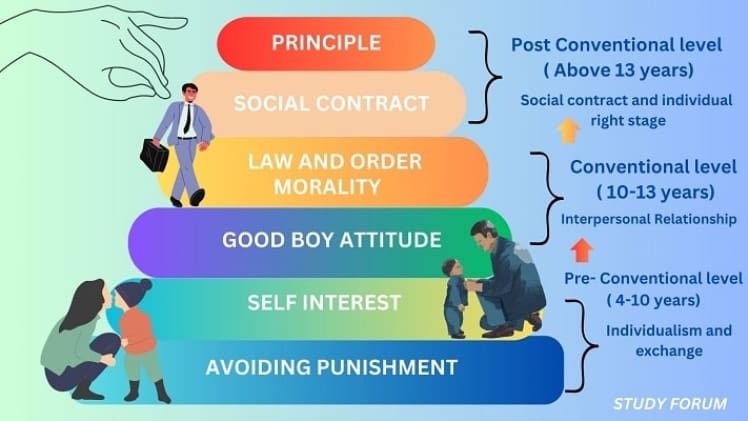
Preconventional morality is an important element of ethical thought and behavior. It is based on the notion that the moral value of an action is determined by its consequences. This means that an action is judged as either right or wrong depending on the outcome it produces. Preconventional morality is often associated with the early stages of moral development, as it is the first type of morality that children learn and develop. In this article, we will explore what preconventional morality is and how it works.
Preconventional Morality
Preconventional morality is a stage of moral development in which the individual has not yet developed an internalized sense of morality. Instead, the person’s moral decisions are based on external rewards and punishments. In other words, the individual is primarily concerned with avoiding punishment and receiving rewards, and their moral decisions are guided by these considerations.
At the preconventional level, the individual does not yet have a concept of moral principles or universal values. Instead, they are more focused on their own self-interests and the immediate consequences of their actions. This is why the individual is more likely to act in a way that will bring them rewards or avoid punishment, rather than act in a way that is considered morally right.
Understanding Its Functioning
Preconventional morality functions as a way for individuals to learn the basics of morality. It helps the individual to understand the consequences of their actions and the consequences of following certain moral principles. This allows them to develop a better understanding of what is right and wrong.
At the same time, it is important to remember that preconventional morality is not a fully-developed morality. It is the first stage of moral development, and it is important for individuals to move beyond this stage and develop a more mature understanding of morality.
Preconventional morality is also important in helping individuals to understand the social norms and expectations surrounding certain actions. By understanding the consequences of their actions, individuals can learn to act in a way that is socially acceptable and that will bring them rewards or avoid punishment.
In conclusion, preconventional morality is an important stage of moral development. It helps individuals to understand the consequences of their actions and the social norms and expectations that surround certain actions. By understanding the basics of morality, individuals can learn to make better moral decisions and develop a more mature understanding of morality.