

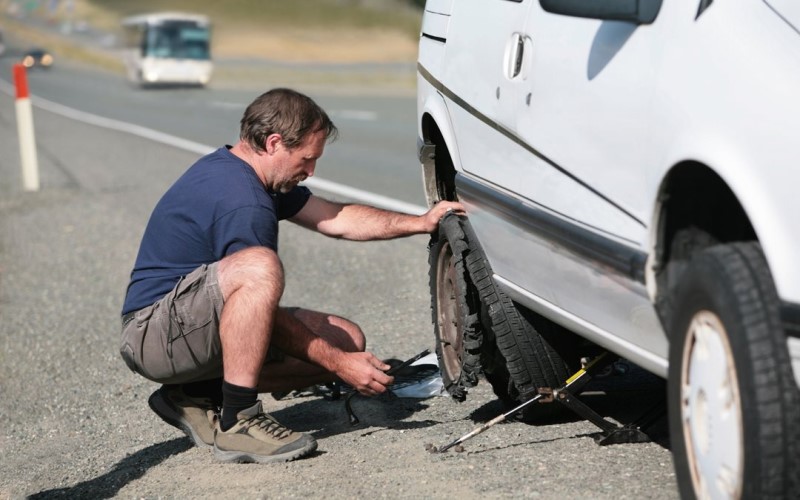
Experiencing a tire failure while driving can be a frightening and potentially dangerous situation. Whether it’s a slow leak leading to a flat tire or a sudden blowout, knowing how to react can mean the difference between a minor inconvenience and a serious accident.
Understanding Tire Failures
Before we dive into handling tire emergencies, it’s crucial to understand the difference between a flat tire and a blowout. A flat tire typically occurs due to a slow leak, allowing you time to react as the tire gradually loses air. Common causes include punctures from nails or other sharp objects, valve stem issues, or simply wear and tear.
On the other hand, a tire blowout is a sudden, explosive loss of air pressure. This can be caused by severe under-inflation, overloading the vehicle, hitting a pothole or curb at high speed, or tire defects. Blowouts are more dangerous as they can cause an immediate loss of vehicle control and potentially a collision with another vehicle.
Recognizing the signs of each is vital. A flat tire often manifests as a rhythmic thumping sound, steering that feels heavier than usual, or the car pulling to one side. A blowout is typically accompanied by a loud bang or pop, followed by a whooshing sound of escaping air and sudden vehicle instability.
Immediate Actions for a Flat Tire
If you suspect you have a flat tire:
- Gradually reduce your speed. Avoid slamming on the brakes, as this can cause you to lose control.
- Activate your hazard lights to alert other drivers.
- Carefully maneuver your vehicle to the right shoulder of the road or another safe location. If you’re on a highway, exit if possible.
- Try to find a level, straight stretch of road with a wide shoulder.
Remember, it’s better to drive a short distance on a flat tire than to stop in an unsafe location. The tire may be ruined, but it’s a small price to pay for your safety.
Handling a Tire Blowout
A blowout requires quick, decisive action:
- Maintain a firm grip on the steering wheel with both hands. Your vehicle may swerve sharply in the direction of the failed tire.
- Do not slam on the brakes. This can cause your vehicle to spin out of control.
- Instead, gently press the accelerator for a moment. This might seem counterintuitive, but it helps stabilize your vehicle and regain control.
- Once you have control, slowly take your foot off the gas and allow the car to gradually slow down.
- Carefully steer your vehicle to a safe location, preferably off the road entirely.
Throughout this process, use gentle, controlled movements. Overreacting can lead to loss of control.
Once You’ve Stopped Safely
After you’ve managed to stop your vehicle:
- Engage the parking brake and turn off the engine.
- Take a moment to calm yourself if you’re shaken.
- Turn on your hazard lights if you haven’t already.
- If it’s safe to exit the vehicle, set up warning triangles or flares behind your car to alert other drivers.
- Assess the damage to your tire and vehicle.
Changing a Flat Tire
If you’re in a safe location and have the necessary tools and knowledge, you can change the tire yourself:
- Consult your owner’s manual for specific instructions for your vehicle.
- Locate the spare tire, jack, and lug wrench.
- Loosen the lug nuts slightly before jacking up the car.
- Use the jack to lift the vehicle, following the manual’s instructions for proper placement.
- Remove the lug nuts and the damaged tire.
- Mount the spare tire and replace the lug nuts, tightening them by hand.
- Lower the vehicle and use the wrench to fully tighten the lug nuts in a star pattern.
However, if you’re on a busy highway, it’s dark, or you’re in an unfamiliar area, it’s often safer to call for professional help. Many vehicles now come with roadside assistance, so check your options before attempting to change the tire yourself.
Preventing Tire Emergencies
Prevention is always better than cure. Here are some tips to minimize your risk of tire failures:
- Regularly inspect your tires for signs of wear or damage.
- Maintain proper tire inflation. Check your tire pressure at least once a month and before long trips.
- Rotate your tires according to your vehicle manufacturer’s recommendations.
- Replace tires when the tread depth reaches 2/32 of an inch.
- Be mindful of your vehicle’s load capacity and avoid overloading.
- Drive cautiously, especially around road hazards like potholes or debris.
Emergency Kit Essentials
Being prepared can make a significant difference in a tire emergency. Consider keeping these items in your vehicle:
- A properly inflated spare tire
- A tire jack and lug wrench
- A flashlight with extra batteries
- Reflective triangles or flares
- A reflective vest for your safety when outside the vehicle
- Basic tools like pliers and screwdrivers
- A tire pressure gauge
- A portable air compressor
- Tire sealant for temporary repairs
Practice and Preparedness
While you can’t predict when a tire emergency will occur, you can prepare for one:
- Familiarize yourself with your vehicle’s manual, especially the sections on changing tires and using the jack.
- Practice changing your tire in a safe environment, like your driveway.
- Mentally rehearse the steps you’d take in case of a blowout. This mental preparation can help you react calmly in a real emergency.
- Keep important phone numbers handy, including roadside assistance or your preferred towing service.
Staying Safe
Tire failures can be scary, but with proper knowledge and preparation, you can handle them safely. Remember the key points:
- Stay calm and avoid sudden movements.
- Gradually slow down and move to a safe location.
- Use your hazard lights and set up warnings for other drivers.
- Change the tire if it’s safe to do so, or call for professional help.
- Regularly maintain your tires to prevent emergencies.
By following these guidelines, you’ll be well-equipped to handle a tire emergency if it occurs. Remember, your safety and the safety of others on the road should always be your top priority. Regular maintenance, careful driving, and being prepared can go a long way in preventing tire-related incidents and ensuring a safe journey every time you hit the road.