

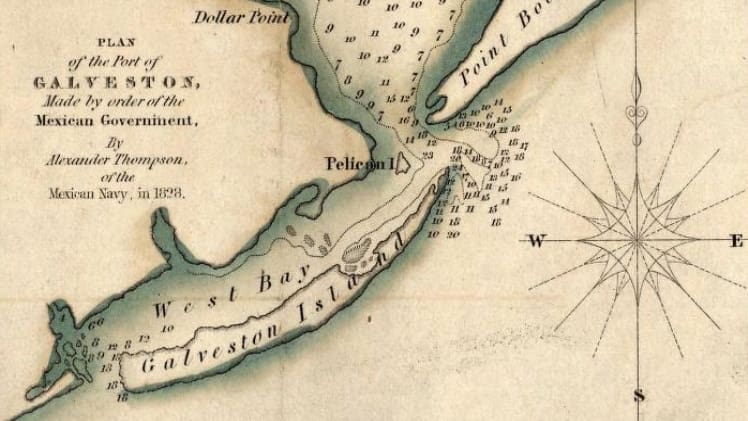
Galveston Bay is located on the Texas coast of the Gulf of Mexico and is the largest estuary in the state. It is home to a variety of aquatic life and serves as an important commercial and recreational hub. But what about its climate? Has Galveston Bay ever frozen, and if so, how?
Galveston Bay’s Climate
Galveston Bay is located in an area of subtropical climate, meaning that it experiences mild winters, warm summers, and plenty of sunshine and humidity throughout the year. The average temperature of the bay is between 60 and 80 degrees Fahrenheit, with the water temperature rarely falling below 50 degrees Fahrenheit. This makes it difficult for the bay to freeze, as it would need to drop to 32 degrees Fahrenheit or lower for this to occur.
Has the Bay Ever Frozen?
The answer to this question is a bit complicated. While the bay itself has never frozen, its tributaries have been known to freeze in some cases. This is due to the fact that the tributaries are much shallower than the bay and can be affected by cold air temperatures more easily. In January of 1899, for example, the San Jacinto River and Buffalo Bayou both froze over, and some of the smaller creeks near Galveston Bay were frozen as well.
However, it is highly unlikely that Galveston Bay would ever freeze, even in the coldest winters. This is due to the fact that its waters are constantly fed by the warm Gulf of Mexico, which serves to keep the bay’s temperature above freezing.
In conclusion, while the tributaries of Galveston Bay can freeze in extreme cases, it is highly unlikely that the bay itself would ever freeze. The shallow waters of the tributaries are much more susceptible to cold air temperatures, and the bay is kept at a relatively warm temperature by the Gulf of Mexico.