

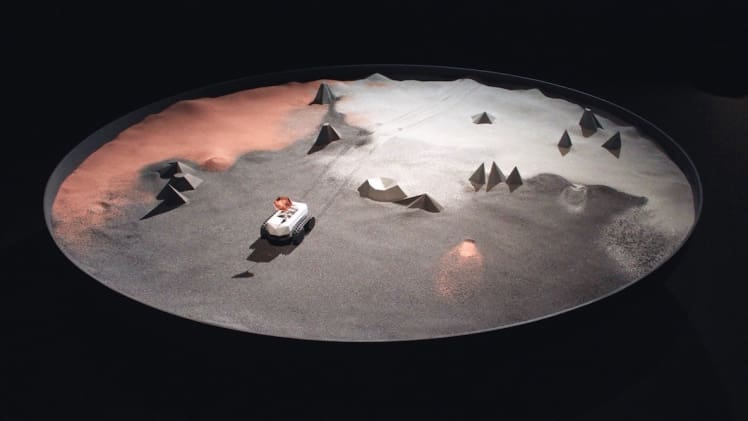
The Sea of Tranquility is an area of the moon that has been of great interest to scientists and space exploration enthusiasts since the Apollo 11 mission first landed on the moon in 1969. It is a wide, flat plain on the near side of the moon, located in the northern hemisphere. The Sea of Tranquility is one of the most recognizable features on the moon’s surface and has become a symbol of exploration and adventure.
What is the Sea of Tranquility?
The Sea of Tranquility is a large, dark, flat plain on the near side of the moon. It is located in the northern hemisphere and is approximately 900 kilometers (560 miles) in diameter. The Sea of Tranquility is the most iconic feature of the moon’s surface, and is visible to the naked eye from Earth. It is one of the oldest surfaces on the moon, estimated to be about 3.5 billion years old.
Exploring the Sea of Tranquility
In 1969, the Apollo 11 mission became the first human mission to land on the moon. The Eagle spacecraft touched down in the Sea of Tranquility, making Neil Armstrong and Edwin “Buzz” Aldrin the first two humans to walk on the surface of the moon. The Apollo 11 mission was a major milestone in space exploration and the Sea of Tranquility has become a symbol of human exploration and achievement.
Since the Apollo 11 mission, the Sea of Tranquility has been explored further by a number of robotic spacecraft, including the Lunar Reconnaissance Orbiter (LRO) and the Clementine mission. These spacecraft have mapped the surface of the Sea of Tranquility in detail, revealing its features and providing scientists with valuable data about its geology and composition.
The Sea of Tranquility is one of the most recognizable and iconic features on the moon’s surface. It holds a special place in history as the site of the first human mission to land on the moon, and is a symbol of human exploration and achievement. The Sea of Tranquility has been explored further by robotic spacecraft, providing us with valuable data about its geology and composition.