

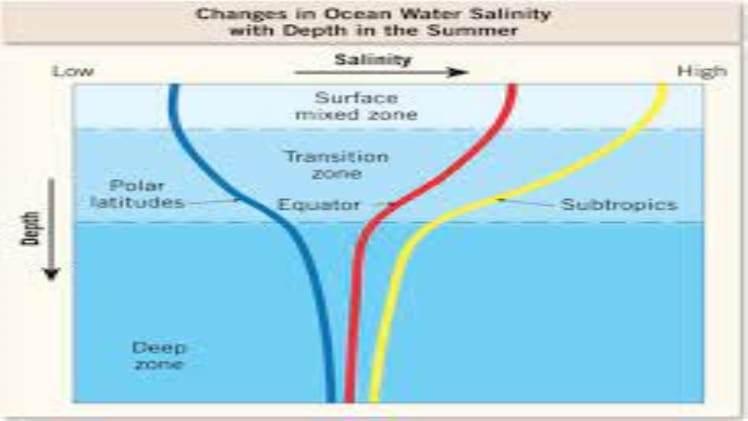
Salinity is the measure of the amount of salt dissolved in a body of water. It is an important factor in determining ocean and freshwater habitats, and its levels can vary significantly depending on the depth of the water. In this article, we will explore the question of whether salinity is higher in deep water.
Salinity in Deep Waters
The salinity of deep waters is typically higher than that of shallow waters. This is because deep waters are generally isolated from the processes that affect the salinity of shallow waters. For example, deep waters are not influenced by runoff from land, and are therefore not subject to the same influx of freshwater that can reduce salinity levels in shallow waters.
In addition, deep waters also tend to be more stagnant than shallow waters. This means that the salt content of deep waters is less likely to be diluted by fresh water sources, which can lead to higher salinity levels.
Examining the Impact of Depth
The impact of depth on salinity levels can be quite dramatic. Generally, the deeper the water, the higher the salinity levels will be. This is because the deeper water is more isolated and less subject to the processes that can affect salinity levels in shallow waters.
In addition, the temperature of the water can also affect salinity levels. Colder waters tend to have higher salinity levels than warmer waters, and this is especially true in deep waters. This is because cold water is denser and is less likely to be affected by processes that can reduce salinity levels.
In conclusion, salinity levels tend to be higher in deep waters than in shallow waters. This is because deep waters are generally more isolated and less subject to processes that can reduce salinity levels. In addition, the temperature of the water can also have an effect, with colder waters tending to have higher salinity levels.