

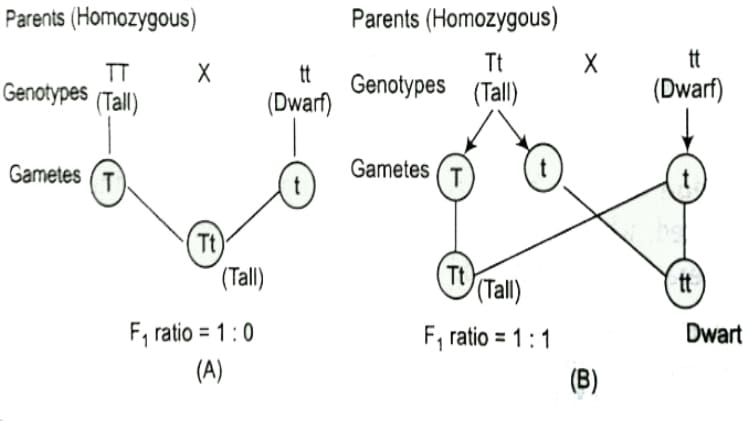
Genetics research is an important field of science that strives to understand the mechanisms of genetic inheritance and how genetic traits are passed down from one generation to the next. A key tool used in genetics research is the test cross, which is used to identify the genotype of an organism and determine the genotypes of its offspring. In this article, we will explore the purpose of test crosses in genetics research.
Understanding Test Crosses
A test cross is a breeding experiment in which an organism of unknown genotype is crossed with an organism of known genotype. The purpose of the test cross is to determine the genotype of the unknown organism by examining the traits of its offspring. Test crosses are commonly used in genetics research to study the inheritance of particular traits and to identify the genotypes of different organisms.
The Purpose of Test Crosses in Genetics Research
The primary purpose of a test cross in genetics research is to identify the genotype of an organism. By examining the traits of the offspring of the test cross, researchers can determine the genotype of the unknown organism. Test crosses can also be used to study how certain traits are inherited and to determine the genotypes of multiple organisms at the same time. Test crosses can also be used to study the effects of mutations and other genetic changes on the phenotype of an organism.
Test crosses are an important tool in genetics research and are used to study the mechanisms of inheritance, identify the genotypes of different organisms, and study the effects of mutations and other genetic changes.
In conclusion, test crosses are an important tool used in genetics research to identify the genotype of an organism, study how certain traits are inherited, and study the effects of mutations and other genetic changes. Test crosses are a valuable tool for understanding the mechanisms of genetic inheritance and how traits are passed down from one generation to the next.