

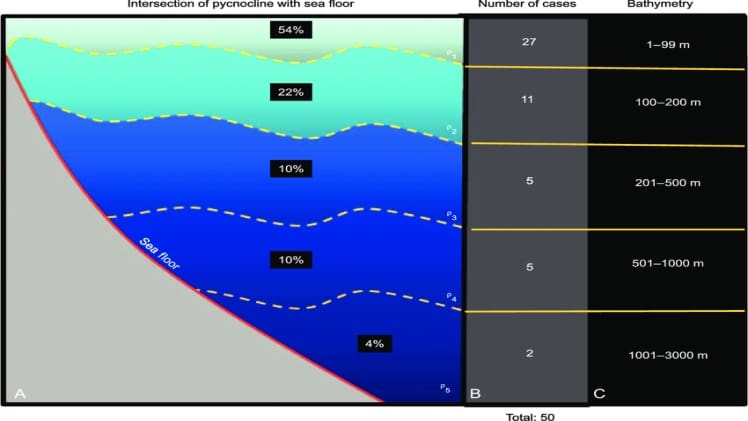
Pycnocline is a layer of water in a lake or ocean where there is a rapid change in density due to a rapid change in temperature or salinity. It is an important feature of the marine environment and plays an important role in the movement of nutrients and other materials. In this article, we will discuss where pycnocline occurs and why it is important.
What is Pycnocline?
Pycnocline is a layer of water in a lake or ocean where there is a rapid change in density due to a rapid change in temperature or salinity. It is caused by the difference in the density of water at different temperatures or salinities. This difference in density creates a barrier that is difficult for materials to cross, and it can create distinct layers in the water.
Pycnocline is an important feature of the marine environment, as it can act as a barrier that prevents the mixing of different water masses. It can also act as a physical barrier to the movement of nutrients and other materials, which can help to maintain the stability of the aquatic environment.
Where Does Pycnocline Occur?
Pycnocline can occur in any lake or ocean, but it is most commonly found in temperate and subtropical waters. In these regions, the water temperature is typically cooler at the bottom and warmer at the top, which can create a pycnocline. This layer can be found at different depths, depending on the water temperature and salinity.
Pycnocline can also occur in areas where there is a rapid change in salinity, such as estuaries or near river mouths. In these areas, the layer can be found at the boundary between the fresh and salt water.
Pycnocline can also be found in areas where there is a rapid change in temperature, such as near the surface of the ocean or in the deep ocean. In these areas, the layer can be found at the boundary between the warmer surface water and the colder deep water.
Pycnocline is an important feature of the marine environment and can play an important role in the movement of nutrients and other materials. It can occur in any lake or ocean, but is most commonly found in temperate and subtropical waters, estuaries, and near river mouths. Pycnocline can also be found in areas where there is a rapid change in temperature, such as near the surface of the ocean or in the deep ocean.